Rustic land in Portugal: can you build on it? The 5 exceptions you should know before you buy
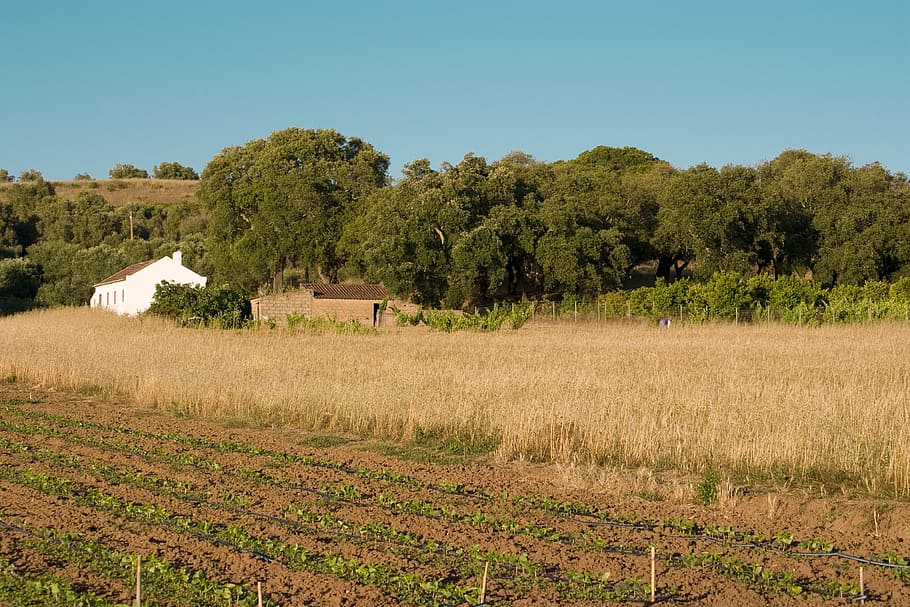
It is probably the question we get asked most often: “I’ve found a rustic plot with an amazing view. Can I build my house there?”
The short answer is: by definition, rustic land is not buildable. The full answer is more interesting, because the law and the Municipal Master Plans (PDM) open a few doors, and it is precisely in those exceptions that good deals are made and expensive mistakes are committed.
In this article we bring together the five situations we come across most often, without promising absolute certainties: in Portuguese planning law there is always an exception to the exception, and every case needs its own analysis.
1. “Rustic” at the Tax Office is not the same as “rustic” in the PDM
This is the case that causes the most confusion. Many plots are registered with the Tax Office (Finanças) as rustic properties (prédios rústicos), and the owner (or the buyer) immediately assumes that nothing can be built there.
But the tax classification and the planning classification are two different things. What determines whether a plot is buildable is not the tax registration (caderneta predial), but the land classification in the PDM’s Zoning Plan (Planta de Ordenamento). If, on that plan, the plot sits in urban land, the land classification prevails and, in principle, it should be possible to build, within the parameters set for that category of land.
We have seen plots registered as “rustic” at the Tax Office that were, in fact, urban plots with considerable building capacity. And we have seen the opposite too: plots advertised as “urban” that, on the plans, sat squarely in rustic land. The rule is simple: before you believe the listing, check the PDM.
2. Rustic land where the PDM allows construction (with many conditions)
There are municipalities whose PDM allows construction on land classified as rustic. But there is no national rule: it depends entirely on the PDM of each municipality.
Some PDMs are very demanding on plot size, allowing construction only on very large properties and with very low building ratios (around 4%, as an example). Others are more flexible on area and allow building on smaller plots, within the parameters set out in the regulations (maximum construction area, number of storeys, height, setbacks and the intended use of the building). Only a reading of the PDM in force tells you where a given plot stands.
And here comes the point most people overlook: complying with the PDM is not enough. The plot must also be outside the RAN (National Agricultural Reserve), the REN (National Ecological Reserve) and any other restrictions (Natura 2000, protected areas, water domain, easements, among others) whose governing entities may make construction impossible. These restrictions override the plan and require a very careful legal analysis, cross-checking the Zoning Plan against the Constraints Plan (Planta de Condicionantes).
3. The ruin: the most common exception, and the one that causes the most mistakes
If there is a classic scenario for building on rustic land, this is it: the plot has a ruin on it.
When everything is in order, a ruin may allow the existing building to be restored, in some cases extended and, in some municipalities, even converted into a tourism project. It is one of the most interesting ways of having a house on rustic land.
But it is also the situation where most people get it wrong, because having a ruin is not enough. Among the questions that usually decide the outcome:
- is the ruin registered (Tax Office and Land Registry), and for what use (dwelling, storage, barn, etc.)?
- is there documentary evidence of its existence and of the area it occupied (old tax records, aerial photographs, surveys)?
- what does the PDM say about rebuilding on rustic land: same footprint? can it be extended? up to what limit?
- is the plot in RAN, REN, Natura 2000, a protected area or any other constraint that changes the rules?
- does the ruin still have identifiable structural elements, or is it now just a pile of stones?
Each of these answers can completely change the feasibility and the value of the plot. We have seen ruins worth little more than the land they stood on, and others that, with the right analysis, supported high-value projects. This topic alone would fill several articles.
4. Land in RAN, with no ruin: housing for farmers
Less well known, but provided for in the law, is the possibility of building or extending a dwelling as the own and permanent residence of a farmer, on land within the RAN where there is an active agricultural holding.
We stress: for farmers, on land with real agricultural activity. This is not an open door for anyone who wants a house in the countryside.
Broadly speaking, it will be necessary to demonstrate, among other requirements, that:
- there is a genuine agricultural holding on the land;
- there is income from that activity;
- there is no alternative location on the property, outside the RAN area (or in a lower-impact zone), for the dwelling.
The process goes through the Regional RAN Authority and the Town Hall, and the burden of proof tends to be high. It is a valid solution for those who genuinely make a living from farming, and a trap for those who think they can work around the rules.
5. Tourism developments on rustic land
Finally, an exception that surprises many people: in several municipalities, the PDM allows tourism developments on rustic land (rural hotels, rural tourism, manor-house tourism, among other categories), often with construction areas well above what would be allowed for housing.
The result is a curious but very real paradox: on the same plot, it may be feasible to build a hotel of considerable size while, at the same time, it is not possible to build a single house. The legislator’s logic is that tourism is an activity compatible with enhancing rural areas, whereas scattered housing is not.
Here too, the rules vary considerably from PDM to PDM: minimum plot size, building ratios, permitted categories, infrastructure requirements and, of course, the constraints (RAN, REN, protected areas). For anyone looking for a tourism project, this is often the most promising route on rustic land, provided the plot is chosen carefully.
In short: every case is different
If there is one idea to take from this article, it is this: the word “rustic” in a listing does not answer the question. What answers it is the cross-check between the Zoning Plan, the Constraints Plan, the PDM regulations, the property registration and the applicable legislation (RAN, REN, RJUE, among others).
That is the work we do before our clients commit to a purchase: understanding, with as much certainty as possible, what can probably and cannot be done on a given plot, and preventing an “amazing view” from turning into an investment with no way out.
Have a plot in mind, or already own rustic land and want to know what you can do with it? Get in touch. A feasibility analysis before you buy costs a fraction of what a mistake costs.
- rustic land
- portugal
- pdm
- ran
- ren