How to Buy Land in Portugal: What to Check Before You Sign
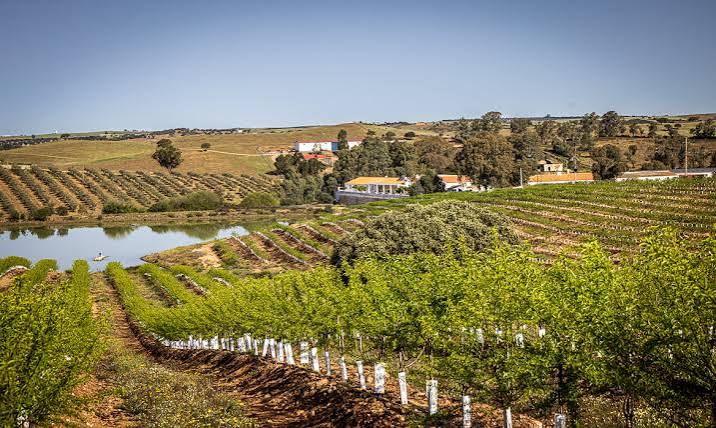
A view, a ruin and an attractive asking price tell you very little about what you can do with a plot. Before signing a Contrato-Promessa de Compra e Venda (CPCV) or paying a deposit, check the property you are buying, where its boundaries are, and whether your intended use is possible.
This checklist is a starting point for that work. The answer for any one plot depends on its records, the municipality's plan and the restrictions that apply to its exact location.
1. Match the property to its documents
Ask for the caderneta predial (tax record) and the certidão permanente do registo predial (land registry certificate). Compare the article and description numbers, owner, area and any buildings described in them. The permanent certificate shows registered rights and pending registration requests, so it is the place to check ownership and recorded charges with your lawyer.
The tax record may call a property rústico, urbano or misto. Those labels do not, by themselves, grant or rule out permission to build. Planning classification comes from the municipal plan. A ruin described as agricultural storage is not automatically a licensed home; ask for evidence of its registered use and the history of any building works.
2. Establish the boundaries on the ground
Compare the advertised area with the records, any survey and the physical boundaries. For rustic and mixed properties, ask whether a Representação Gráfica Georreferenciada (RGG) exists in BUPi. Walk the perimeter with someone who knows the land, and resolve gaps or overlaps before you commit to a price based on a particular area.
Decree-Law 87/2026 expanded the requirement to identify the RGG in documents transferring ownership, with exceptions where it is already recorded in BUPi or the property is in the cadastral map. That change took effect in April 2026. 1 October 2026 changes the fee for certain RGG services; it is not the start of a new blanket ban on deeds. Check the current status of the specific property with the notary or registry professional handling the transaction.
3. Read both sides of the municipal plan
Find the plot on the municipality's Plano Diretor Municipal (PDM). Read its Planta de Ordenamento to identify the land category and the regulation for your proposed use. Then read the Planta de Condicionantes: restrictions such as the Reserva Ecológica Nacional (REN), Reserva Agrícola Nacional (RAN), protected areas, watercourses and servitudes can change the answer.
Do not treat a promising zoning colour as a permit. REN and RAN have their own legal regimes and possible exceptions; the result depends on the mapped part of the plot, the proposed works and the relevant authority. A local architect or planning lawyer can reconcile the maps and regulations for the parcel you are considering.
4. Test the project you actually want
If you want to build, restore a ruin or operate a tourism project, write down the proposed use and approximate size before asking the municipality. A general claim that land has “potential” is too vague to test.
A Pedido de Informação Prévia (PIP) lets an interested person ask the municipality about a proposed planning operation before buying the land. Article 14 of the RJUE sets out this route, including what a non-owner must identify in the request. The scope of the answer depends on what you submit. Your architect can advise whether a PIP is the right next step and what drawings or documents it needs.
For a ruin, also check what was legally there: its registry description, approved use, evidence of its original footprint and any constraints on reconstruction. The presence of stone walls alone does not settle those questions.
5. Verify access, water and services
Visit the plot and check how you would reach it in every season. Establish whether the road is public or access depends on a registered right of way over another property. Ask the relevant providers about electricity and communications instead of estimating connection costs from the distance to the nearest pole.
If a well or borehole matters to the project, ask for its records and check the applicable water-use requirements with the Portuguese Environment Agency. Also establish how drinking water and wastewater would be handled. Existing equipment on a plot is not proof that a proposed use is authorised.
6. Put unresolved checks into the purchase process
Before the CPCV, give your lawyer and architect the documents, the mapped parcel and your intended use. Ask them to identify what is confirmed, what needs an authority's answer and what would make you walk away. If the purchase depends on a PIP, a boundary correction, access or another condition, have the lawyer address that in the contract before money changes hands.
The useful question is not “Is this cheap land?” It is “Does this exact property support the project I am buying it for?” Getting that answer early can save a costly mistake.
- buying land
- portugal
- pdm
- due diligence